
Find Royal Kunia Property Tax Records
Royal Kunia property tax records are filed and maintained by the Honolulu County Real Property Assessment Division, which handles all Oahu properties including this upscale Central Oahu golf community. Royal Kunia sits at an elevated location above the Waianae foothills and offers views of Pearl Harbor and the mountains that set it apart from most of the Central Oahu market. Median home values here run around $900,000, making it one of the higher-value residential communities in the area. Golf course frontage pushes some lots well above that figure. Because values frequently exceed $1,000,000, owners need to pay close attention to tax classification, the home exemption deadline, and whether the Residential A rate structure applies to their property.
Royal Kunia Overview
How to Access Royal Kunia Property Tax Records
The Honolulu County RPAD provides two main tools for accessing property records online. The primary portal is at realproperty.honolulu.gov. The parcel search tool is at qpublic.honolulugov.org. Both are free to use and require no login.
In the parcel search, you can look up a Royal Kunia property by street address, owner name, or parcel number. The result shows the assessed land value, assessed improvement value, total assessed value, tax class, any active exemptions, and the computed annual tax. You can also see values from prior years, which is useful if you want to track how your assessed value has changed over time.
The RPAD Kapolei office is the closest RPAD location to Royal Kunia. The address is 1000 Uluohia Street, Suite 206, Kapolei, HI 96707. Phone is (808) 768-3799. Office hours are Monday through Friday, 7:45 AM to 4:30 PM. Staff there handle Leeward and Central Oahu properties and can answer questions about your specific parcel, provide documentation, or help with exemption filings.
Deed records are a separate matter. Recorded deeds, mortgages, and other conveyance documents are filed with the Hawaii Bureau of Conveyances, not RPAD. Those records are governed by Hawaii Revised Statutes Chapter 502. If you need the recorded deed for a Royal Kunia property, that is where to look.
How Royal Kunia Properties Are Assessed
Royal Kunia is a master-planned executive home community. The golf course, the country club, the view corridors, and the overall quality of the development all influence market values. RPAD appraisers use comparable sales from within Royal Kunia and from similar executive home developments when setting assessed values. Sales from Mililani, Wahiawa, or other Central Oahu communities are generally not appropriate comparables because the price levels are different enough to distort the analysis.
Golf course frontage is the biggest variable within the community. Lots that front the Royal Kunia Country Club golf course sell at a significant premium over interior lots of similar size. RPAD is supposed to capture that premium in assessed values. If your lot is on the course and the assessment does not reflect that, it is worth checking what comparables were used. Pull the notice of assessment and see what the RPAD has on file for your parcel.
Views matter too. Properties with clear sightlines to Pearl Harbor or the Waianae Mountains sell for more. The premium varies with the quality and extent of the view. If your property has a notable view feature that is not reflected in the assessed value, that is a point to document if you decide to appeal.
The overall assessment process is governed by Hawaii Revised Statutes Chapter 246, which sets the legal framework for how assessments are made and how values must be supported. RPAD must assess at fair market value, and the comparable sales method is the standard approach for residential properties like those in Royal Kunia.
Residential A Classification in Royal Kunia
Honolulu County has a Residential A tax class that applies to residential properties valued over $1,000,000 that do not have an active home exemption on file. With median values around $900,000 and many Royal Kunia properties, especially golf course lots, well above that threshold, this is a real concern for owners who rent out their property or have not filed for the exemption.
The Residential A rate structure works in tiers. The standard Residential rate with a home exemption in place is $3.50 per $1,000 of assessed value. Without the exemption on a property valued over $1,000,000, the Residential A rates apply: $4.50 per $1,000 for the portion of value between $1,000,000 and $1,500,000 (Tier 1), and $9.00 per $1,000 for any value above $1,500,000 (Tier 2). On a property assessed at $1,200,000, that means a meaningfully higher tax bill than a comparable property with the exemption.
Full details on the Residential A program are at realproperty.honolulu.gov/help-resources/residential-a/. Read that page carefully if you own a Royal Kunia property without the home exemption. The difference in annual tax cost can be substantial, particularly on higher-value lots.
The straightforward way to avoid Residential A classification is to have the home exemption on file. If you live in your Royal Kunia home as a primary residence, file the exemption. It is free to apply, and it saves money every year. The September 30 deadline applies.
Home Exemption for Royal Kunia Owners
The home exemption reduces your assessed value before the tax rate is applied. Owners under 65 get a $120,000 reduction. Owners who are 65 or older get $160,000 off. Either way, the exemption also changes your classification from Residential A to Residential, which makes a significant difference when your assessed value is over $1,000,000.
The application is online at realproperty.honolulu.gov/tax-relief-and-forms/exemptions/home-exemption/. You can also get the paper form at the Kapolei RPAD office. The form is short. You need your parcel number, your name as it appears on the deed, and confirmation that the property is your primary residence.
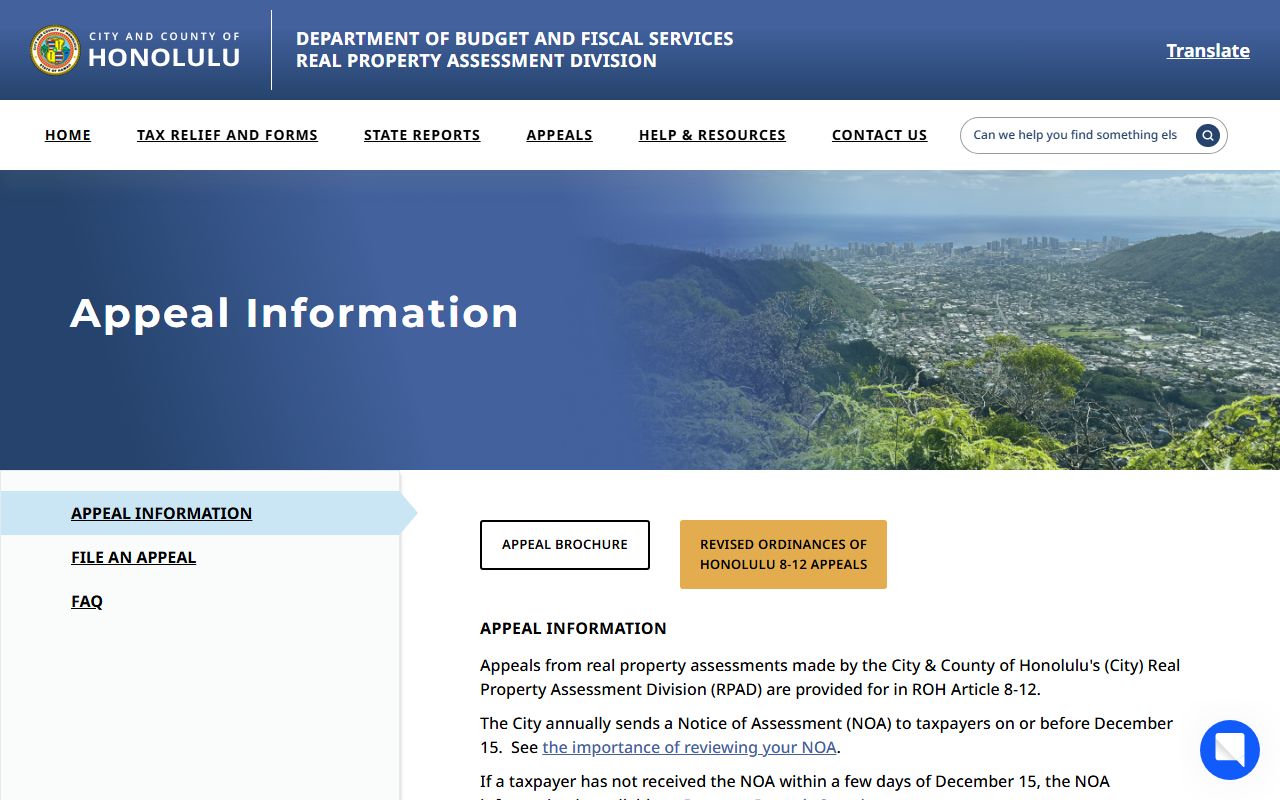
The Honolulu County RPAD property tax appeal procedures page, shown below, covers what Royal Kunia homeowners need to know if they want to contest an assessment.
Once you file the exemption and it is approved, it renews automatically each year as long as you own the property and continue to use it as your primary residence. If you move, sell, or convert the property to a rental, you need to notify RPAD so they can remove the exemption. Keeping an exemption on a property that no longer qualifies is an error that can result in back taxes and penalties.
Appealing Your Royal Kunia Assessment
Given the high values in Royal Kunia, even a small percentage error in the assessed value translates to a real dollar impact on your tax bill. The formal appeal window runs from December 15 to January 15 each year. That is 31 days. After January 15, the window closes and you cannot contest that year's assessment through the board process.
For a Royal Kunia appeal to succeed, you need comparables from within the community or from genuinely similar executive home developments. Three to five recent closed sales of homes that match yours in size, age, condition, lot type (golf course vs. interior), and view quality give the board something concrete to work with. General statements about the market or anecdotal comparisons do not carry weight at a formal hearing.
If your property is on the golf course, use golf course comps. If it has a view, document the view and find sales of other view properties. If the RPAD used interior lot sales to set the value on a course-front property, that is a specific argument you can make. Bring the actual assessment notice, your proposed comparables, and any documentation about the specific features of your lot that the comps support.
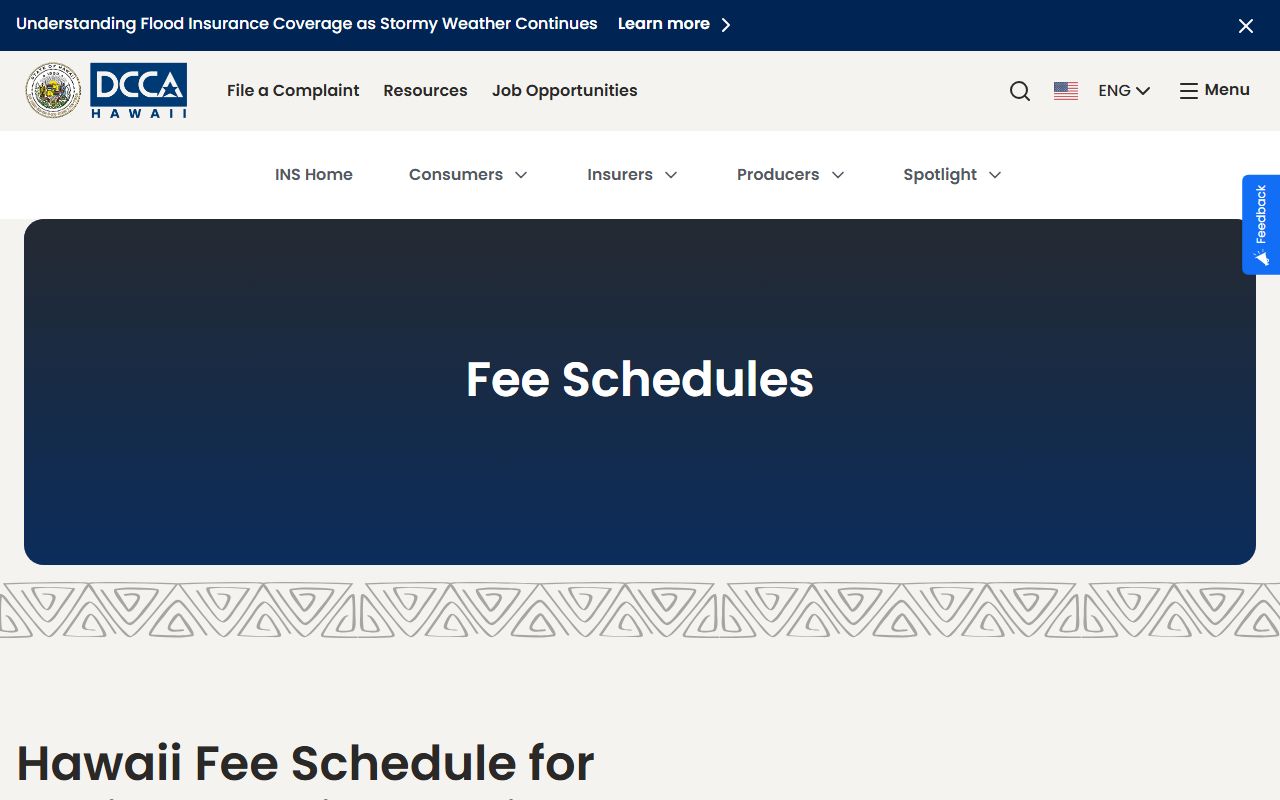
The Hawaii Bureau of Conveyances fee schedule, shown below, is relevant for Royal Kunia owners who need to record documents or verify recorded title information as part of preparing an appeal or confirming ownership details.
Full appeal procedures are at realproperty.honolulu.gov/appeals/appeal-information/. Review these before you file. The process has specific deadlines and documentation requirements. Missing any of them can get your appeal dismissed before the board even looks at the merits.
Key Dates for Royal Kunia Property Owners
The annual Honolulu County property tax cycle follows a fixed schedule. Royal Kunia owners should mark these dates.
October 1 is the assessment date. Values are determined as of that day. September 30, the day before, is the exemption deadline. Both fall in the same window, which means first-time filers need to get the exemption in before the assessment is set. The appeal window opens December 15 and closes January 15. Tax payments are split: the first installment is due August 20, and the second is due February 20 of the following year.
Owners with mortgage escrow accounts usually have taxes paid automatically, but it is worth confirming with your lender each year, especially if your tax bill changes due to a reassessment or a change in classification. The RPAD FAQ at realproperty.honolulu.gov/help-resources/faq/ covers common questions about payments, escrow, and what happens when values change mid-year.
Honolulu County Property Tax Records
Royal Kunia is part of Honolulu County, which administers all property taxes on Oahu. The county page covers the full RPAD system, tax rates including Residential A, exemption programs, and the appeal process in greater detail.
Nearby Cities
These communities are near Royal Kunia and are all served by Honolulu County RPAD for property taxes.