
Kailua Property Tax Records
Kailua property tax records are managed by the Honolulu County Real Property Assessment Division, which handles all assessments, exemptions, and billing for this Windward Oahu community. Kailua sits east of the Ko'olau Mountains and has some of the highest residential property values on Oahu, with median home values well above $1 million in most neighborhoods. If you own property in Kailua, want to check your assessed value, or need to find information about a specific parcel, the RPAD online portal is where you start. Records are public and searchable by address or tax map key number.
Kailua Overview
Honolulu County RPAD: Who Handles Kailua Assessments
All property tax records for Kailua fall under the Honolulu County Real Property Assessment Division. Hawaii has a unique structure where the county, not the state, handles all real property tax administration. The City and County of Honolulu is the governing body, and RPAD sits within that structure. There is no separate city property tax in Kailua. One county office sets the rates, assesses properties, and handles all exemption requests.
The main RPAD office is at 842 Bethel Street, Basement, Honolulu, HI 96813. You can reach them at (808) 768-3799. Office hours are Monday through Friday, 7:45 AM to 4:30 PM. If you are in Windward Oahu and prefer not to drive to downtown Honolulu, the Windward City Satellite Hall provides limited RPAD services closer to Kailua. Not every transaction can be done at the satellite location, so call ahead before making a trip there.
For online access, RPAD operates two main tools. The portal at realproperty.honolulu.gov is where you file exemptions, find forms, and learn about key deadlines. The property search database at qpublic.honolulugov.org lets you look up any parcel by address or tax map key number. You can see the assessed land value, building value, and tax classification for any property in Kailua from that search tool.
| Office | Honolulu County Real Property Assessment Division |
|---|---|
| Address | 842 Bethel Street, Basement Honolulu, HI 96813 |
| Phone | (808) 768-3799 |
| Hours | Monday through Friday, 7:45 AM to 4:30 PM |
| Property Search | qpublic.honolulugov.org |
| Main Portal | realproperty.honolulu.gov |
How Kailua Properties Are Assessed
Kailua sits within the Windward Oahu assessment district. RPAD assigns specialized appraisers who know this market. They use comparable sales drawn from within Kailua and nearby Lanikai rather than pulling data from the other side of the island. This matters a lot because Windward Oahu properties have their own market dynamics. The Ko'olau Mountains, ocean access, and the character of individual neighborhoods all play into value. A house in Pearl City is not a good comp for a house in Kailua, and RPAD knows that.
Within Kailua itself, location makes a large difference. Properties on "the flat" near the beach, especially on the Kailua Beach Park side of town, carry significantly higher values than homes on the hillside or further inland. Properties fronting Kalaheo Avenue on the beach side command substantial premiums. Beachfront estates in the Lanikai area (which is part of the Kailua community, not a separate city) can assess at $10 million or more. If you are working on an appeal or trying to understand your assessed value, you need to use comparables from the same micro-location. Comparing a Lanikai beachfront home to an inland Kailua property will not hold up in front of the Board of Review.
Assessment is as of October 1 each year. RPAD uses sales data, market trends, and physical inspections to set values. If they cannot access your property for an inspection, they estimate based on available data. You have the right to see how your assessment was reached and to ask questions at any time.
The RPAD home exemption application, available at realproperty.honolulu.gov, shows the forms and deadlines Kailua homeowners need to keep their exemption current.
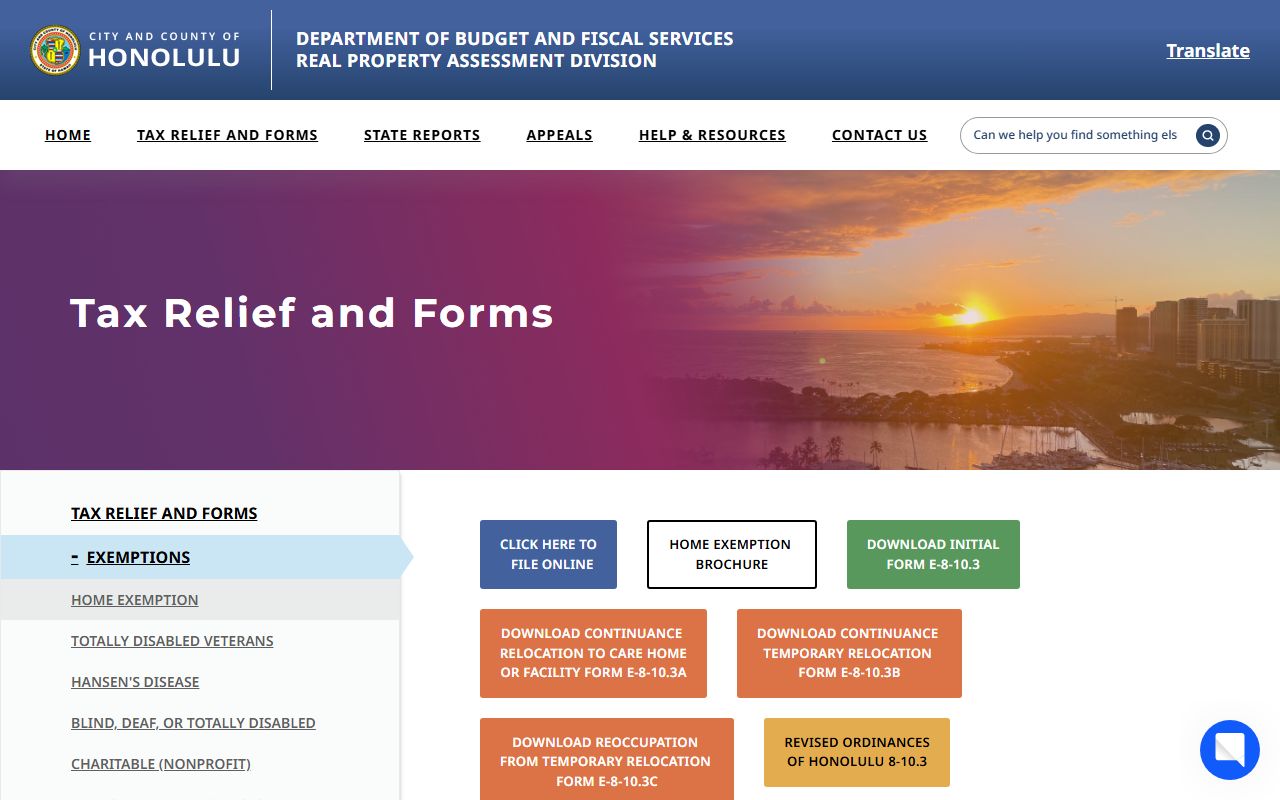
Filing before the September 30 deadline keeps your exemption in place for the next tax year and can make a significant difference on a high-value Kailua property.
The Residential A Classification in Kailua
Kailua has one of the highest concentrations of Residential A classified properties on Oahu. The reason is simple: the median home value in Kailua exceeds $1 million, and that is where Residential A kicks in. Any property valued over $1 million that does not have a home exemption on file gets classified as Residential A. The rate is higher than standard Residential. This affects many owners who use their Kailua property as a second home, investment property, or vacation rental.
The Residential A rate structure has two tiers. The first tier covers the assessed value between $1 million and $1.5 million, taxed at $4.50 per $1,000. The second tier covers everything above $1.5 million, taxed at $9.00 per $1,000. Standard Residential properties with a valid home exemption are taxed at $3.50 per $1,000. The difference is substantial. A Kailua home assessed at $1.8 million without an exemption faces a much higher bill than the same property with an owner-occupant exemption on file. RPAD explains the full Residential A rules at realproperty.honolulu.gov/help-resources/residential-a/.
If you own a Kailua property and live there as your primary residence, file for the home exemption. Don't skip this step.
Home Exemption for Kailua Homeowners
The home exemption reduces the assessed value that your tax rate is applied to. For owners under 65, the exemption amount is $120,000. For owners 65 and older, it rises to $160,000 (set to increase further in July 2027). On a Kailua property with a $1.2 million assessed value, the exemption reduces your taxable base and also keeps you in the standard Residential classification rather than Residential A. That combination creates real savings.
You file the home exemption once, and it stays in place as long as you live at the property as your primary home. The deadline to file is September 30. If you miss that date, you have to wait until the next cycle. New buyers should file right after closing. The exemption application is at realproperty.honolulu.gov. You will need your tax map key number, proof that the property is your primary residence, and a valid Hawaii ID showing the Kailua address. Some owners also qualify for the low-income exemption or the disability exemption. Check the RPAD forms page to see what fits your situation.
Other relief programs exist beyond the standard exemption. Seniors on fixed incomes, disabled veterans, and certain long-term residents may qualify for additional reductions. It is worth checking the RPAD site or calling the office to ask.
Vacation Rentals and Property Classification
Kailua is a popular visitor destination. That has created enforcement issues around vacation rentals. Legal short-term rentals in Kailua require a permit from the Honolulu Department of Planning and Permitting. RPAD works with Planning and Permitting to flag properties that appear to be operating as transient vacation units without the right permits. If RPAD finds that a property is being used as a short-term rental without an approved permit, the tax classification can change. This could move a property from Residential to a higher-rate classification.
If you own a Kailua property and use it for vacation rentals, make sure your permits are in order before your next assessment cycle. The classification change can apply retroactively in some situations. Property owners have been caught off guard by this. The RPAD FAQ at realproperty.honolulu.gov/help-resources/faq/ covers classification rules in more detail.
Key Dates and How to Appeal
Property tax in Honolulu County follows a set calendar each year. Assessment is as of October 1. The exemption deadline is September 30. Appeal notices and the appeal window run from December 15 through January 15. Tax bills go out twice a year, with payments due August 20 and February 20. Missing a payment date results in penalties and interest, so set reminders if you manage the property from off-island.
If your assessed value seems too high, you can appeal. The process starts by filing an appeal with the Board of Review within the December 15 to January 15 window. You will need to show that the assessed value is greater than the fair market value of your property as of October 1. The strongest appeals use recent comparable sales from your specific neighborhood. For Kailua properties, that means using sales within Kailua proper and, if you are in Lanikai, specifically from Lanikai. Cross-neighborhood comparisons usually do not hold up. RPAD posts appeal forms and detailed procedures at realproperty.honolulu.gov/appeals/appeal-information/.
Hawaii Revised Statutes govern the property tax system. HRS Chapter 246 covers real property tax administration statewide. HRS Chapter 502 governs the Bureau of Conveyances, which records deeds and other property documents. Both chapters are available on the Hawaii state legislature website. These are worth reading if you are working through an appeal or a property purchase that involves prior tax issues.
The Hawaii Bureau of Conveyances fee schedule, available at cca.hawaii.gov/boc/fees/, covers recording costs for deeds and other documents tied to Kailua properties.

When a Kailua property changes hands, the deed gets recorded with the Bureau of Conveyances, and that sale data feeds into RPAD's comparable sales analysis for future assessments.
Honolulu County Property Tax Records
Kailua is in the City and County of Honolulu, and all property tax records for the area flow through the county RPAD office. The county page covers the full range of Honolulu County property tax information, including rates for all tax classifications, forms, and links to the search database. If you want a broader view of how the system works across the county, start there.
Nearby Cities
These nearby Hawaii communities also fall under Honolulu County property tax administration.