
Find Kaneohe Property Tax Records
Kaneohe property tax records are administered by the Honolulu County Real Property Assessment Division, the same office that handles all property assessments across the City and County of Honolulu. Kaneohe is a large Windward Oahu community with a mix of bayfront parcels, hillside residential neighborhoods, and commercial corridors. Median home values run around $850,000. Whether you are checking an assessment on a Kaneohe Bay-view property, looking up a hillside parcel, or trying to understand your tax classification, the RPAD online portal gives you access to public records for any parcel in the area.
Kaneohe Overview
Where Kaneohe Property Records Are Managed
The Honolulu County Real Property Assessment Division handles all Kaneohe property tax records. RPAD is part of the City and County of Honolulu government. The main office is in downtown Honolulu at 842 Bethel Street, Basement, Honolulu, HI 96813. Phone is (808) 768-3799. Hours run Monday through Friday, 7:45 AM to 4:30 PM.
Kaneohe residents who do not want to drive to downtown Honolulu have a closer option. The Windward City Satellite Hall offers limited RPAD services. This is useful for basic questions, dropping off forms, or getting help with an exemption filing. Not all transactions are available at the satellite location, though. If you need to handle something specific, call RPAD first to confirm what can be done there versus at the main office.
Online access is available through two main tools. The property search database at qpublic.honolulugov.org lets you look up any Kaneohe parcel by address or tax map key number. You can see assessed land values, building values, and the assigned tax classification. The broader RPAD portal at realproperty.honolulu.gov covers exemption forms, appeal procedures, and the latest news on rate changes or policy updates. Both are free to use and open to the public.
| Office | Honolulu County Real Property Assessment Division |
|---|---|
| Address | 842 Bethel Street, Basement Honolulu, HI 96813 |
| Phone | (808) 768-3799 |
| Hours | Monday through Friday, 7:45 AM to 4:30 PM |
| Property Search | qpublic.honolulugov.org |
| Main Portal | realproperty.honolulu.gov |
How Location Shapes Kaneohe Property Values
Kaneohe has a wider range of property values than most Windward communities. The reason is topography. Bayfront homes along Kaneohe Bay sit at one end of the market. These properties can carry significant premiums, but they also come with constraints. Flood hazard designations, environmental restrictions near the bay, and limits on what you can build all factor in. RPAD accounts for these conditions when setting land values for bayfront parcels. Views of the bay, Ko'olau mountain ridgelines, or the Mokapu Peninsula all affect how an appraiser weights a given property.
Hillside neighborhoods tell a different story. Windward Estates and other mid-elevation areas have their own comps and market dynamics. Views from the hillside are often strong, but access can be a factor, and some properties sit in areas with soil or drainage issues that limit development. Haiku Valley and Temple Valley have distinct market characteristics as well, with older neighborhoods that RPAD treats differently from newer subdivisions closer to the town center.
Newer housing in the area of the former Kaneohe Naval Air Base (KNAB) commands premium values. Those homes went up on redeveloped military land and tend to be newer construction with modern amenities. RPAD does not lump them together with older Windward Estates properties when pulling comparable sales. If you own property in any of these sub-areas and your assessment seems off, look closely at which comps RPAD used. That is where most successful appeals begin.
The Kaneohe Public Library, listed at librarieshawaii.org, provides access to Honolulu County property records, historical maps, and Windward Oahu development research resources for property owners doing their own research.
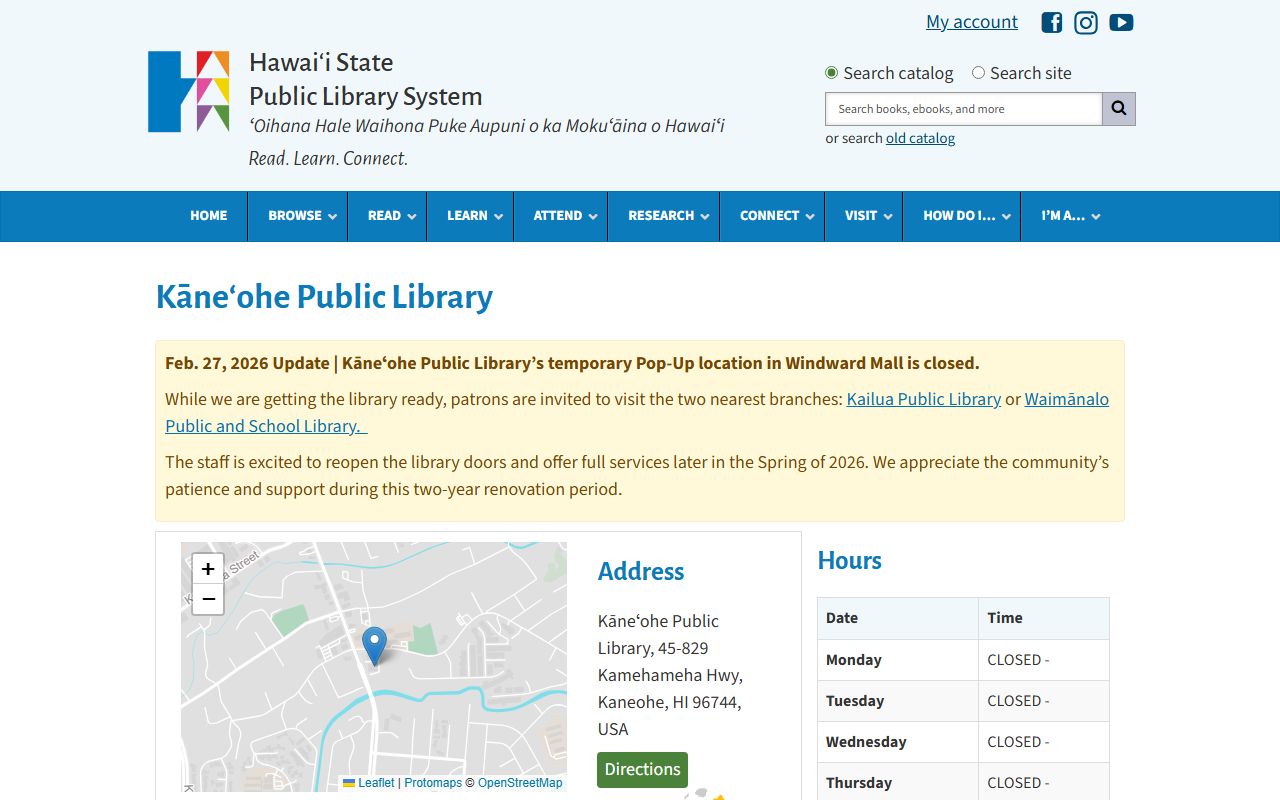
Library staff can help you navigate the RPAD online search tools and Bureau of Conveyances records, which is useful if you are building a case for an assessment appeal or tracing ownership history for a specific parcel.
Marine Corps Base Hawaii and Local Property Values
Marine Corps Base Hawaii (MCBH), based in Kaneohe, has a measurable effect on the local property market and on RPAD's assessment process. The base occupies a large portion of the Mokapu Peninsula, including training areas and housing. Information about the base is available at the MCBH official website, though access to some base information is limited to authorized users.
Aircraft operations at MCBH generate noise contours and overflight easements that affect properties near the base perimeter. Properties within high-noise zones may carry depressed values compared to similar properties in quieter parts of Kaneohe. RPAD factors this in. If your property sits within a recognized noise-impact area, that should be reflected in your assessed land value. If you believe RPAD has not adequately accounted for noise impacts in your assessment, that is a legitimate basis for an appeal, and you can support it with FAA noise contour data and comparable sales outside the noise zone versus within it.
The military presence also shapes the rental market. Privatized military housing on base affects how many service members compete in the local rental market. Military housing allowances influence what private-market landlords can charge in Kaneohe, which in turn affects income data for any commercial or investment properties RPAD assesses in the area.
Former KNAB land, now redeveloped into civilian housing, is a separate market segment within Kaneohe. These homes are newer construction and do not have the same value profile as older Windward neighborhoods. Buyers, owners, and assessors all treat them differently, which matters when comparing tax assessments across Kaneohe.
Home Exemption and Other Tax Relief
Owner-occupants in Kaneohe can reduce their tax bill by filing for the home exemption. The exemption reduces the taxable assessed value by $120,000 for owners under 65 and $160,000 for owners 65 and older. It also helps keep your property in the standard Residential classification rather than Residential A. Kaneohe has fewer Residential A properties than Kailua because median values are lower, but higher-end Kaneohe homes and bayfront properties can still cross the $1 million threshold where the classification matters.
The home exemption deadline is September 30. You file once and it stays in place as long as the property remains your primary residence. If you sell or move, the exemption should be removed. New buyers should file right after closing. Forms are available at realproperty.honolulu.gov/tax-relief-and-forms/forms/. Beyond the basic exemption, RPAD offers additional relief programs for seniors, disabled residents, and people with low incomes. Call the RPAD office at (808) 768-3799 to ask what programs might apply to your situation.
The RPAD appeal procedures page at realproperty.honolulu.gov/appeals/appeal-information/ lays out the steps Kaneohe property owners need to follow when challenging an assessed value.
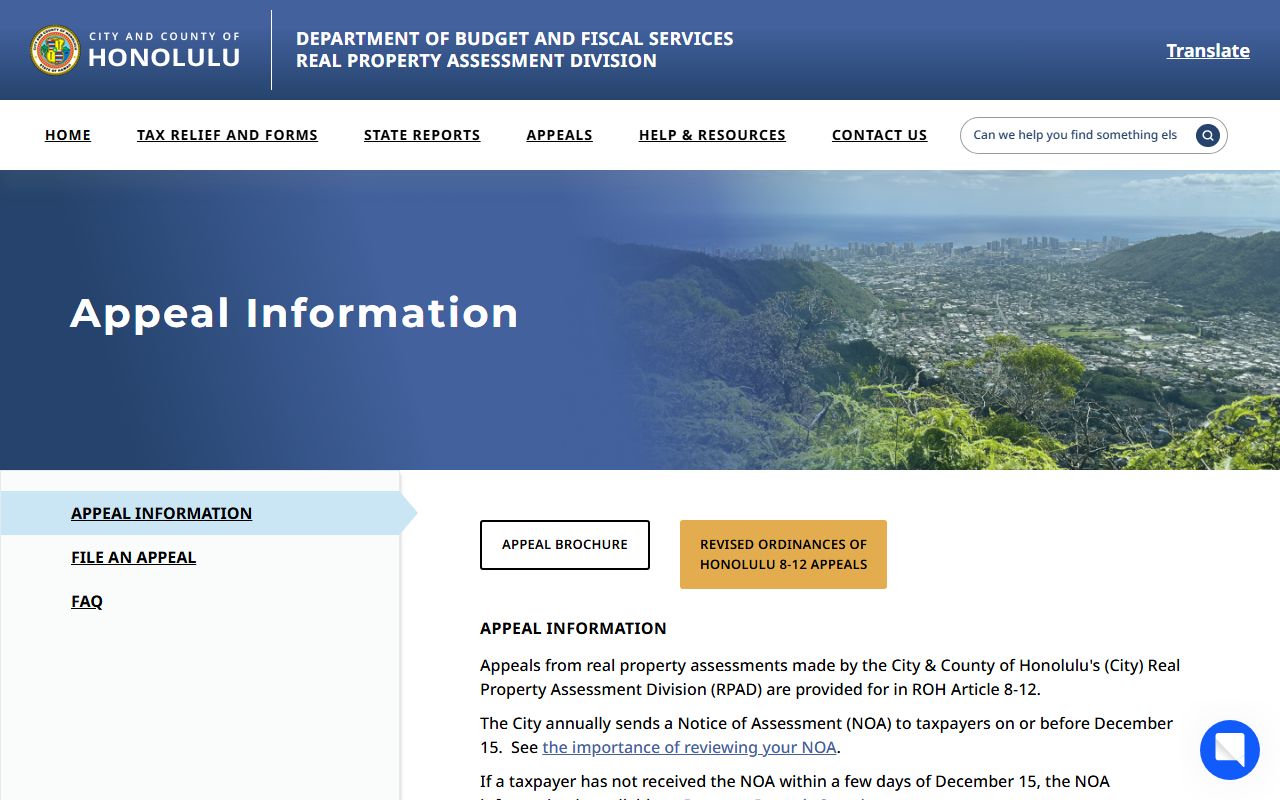
Appeals must be filed between December 15 and January 15, and strong appeals rely on comparable sales data drawn from the same micro-location within Kaneohe, not from other Windward communities with different market conditions.
Key Dates, Payments, and the Legal Framework
Honolulu County property tax runs on a fixed annual calendar. Assessment is as of October 1 each year. The home exemption deadline is September 30. The appeal window runs from December 15 through January 15 of the following year. Tax bills are split into two payments: August 20 and February 20. These dates apply to every property in the county, including all Kaneohe parcels. Late payments incur penalties and interest, so pay attention to the calendar if you own property in Kaneohe but live or work elsewhere.
If your Kaneohe assessment comes in higher than expected, filing an appeal is your main remedy. The process requires a written appeal to the Board of Review before the January 15 deadline. You present evidence that the assessed value exceeds fair market value as of October 1. Comparable sales are the most powerful evidence. For Kaneohe, use sales from within the same neighborhood type. Hillside comps for hillside properties, bayfront comps for bayfront properties. Do not mix them. RPAD's appeal information page at realproperty.honolulu.gov/appeals/appeal-information/ walks through what to file and how the hearing process works.
Hawaii state law governs the entire property tax system. HRS Chapter 246 covers real property tax administration, including the assessment process, exemptions, and appeal rights. HRS Chapter 502 covers the Bureau of Conveyances, which records deeds and property documents. Both statutes are on the Hawaii legislature's official website. If you are buying property in Kaneohe or contesting an assessment, these chapters lay out your rights clearly.
The RPAD FAQ at realproperty.honolulu.gov/help-resources/faq/ covers common questions about how assessments work, when values change, and how to read your notice. It is a good starting point if this is your first time working through the system.
Honolulu County Property Tax Records
Kaneohe is part of the City and County of Honolulu. All property tax records, rates, and exemption programs are managed at the county level by RPAD. The Honolulu County page covers the full classification system, current tax rates, and links to all county resources. If you want to understand how Kaneohe fits into the broader county tax structure, start there.
Nearby Cities
These communities are close to Kaneohe and share the same Honolulu County property tax administration.